Warli painting is one of the oldest living folk art traditions in the world, with roots traceable to rock engravings dating back to 2500 BCE. Created by the indigenous Warli tribe inhabiting the forested foothills of Western India, this art form was traditionally executed not for commerce, but as a ritual blessing on the mud walls of village huts.
### The Elemental Geometry of the Tribe
Unlike classical Indian miniatures or court art, Warli art does not depict deities, kings, or mythological pantheons. Instead, it honors daily life, seasonal harvests, and the cosmic order using three elementary geometric forms:
- **The Circle**: Represents the sun (*Surya*) and moon (*Chandra*), celestial anchors that govern sowing and reaping.
- **The Triangle**: Symbolizes sacred mountains (*Pahar*) and pointed tree canopies. Two inverted triangles meeting at a single tip form the human body—the upper triangle representing the torso and the lower triangle representing the hips, expressing perpetual movement and balance.
- **The Square**: Represents sacred enclosures (*Chauk*), demarcating consecrated ground, harvest granaries, and the hearth.
### The Alchemy of Cow-Dung and Rice Paste
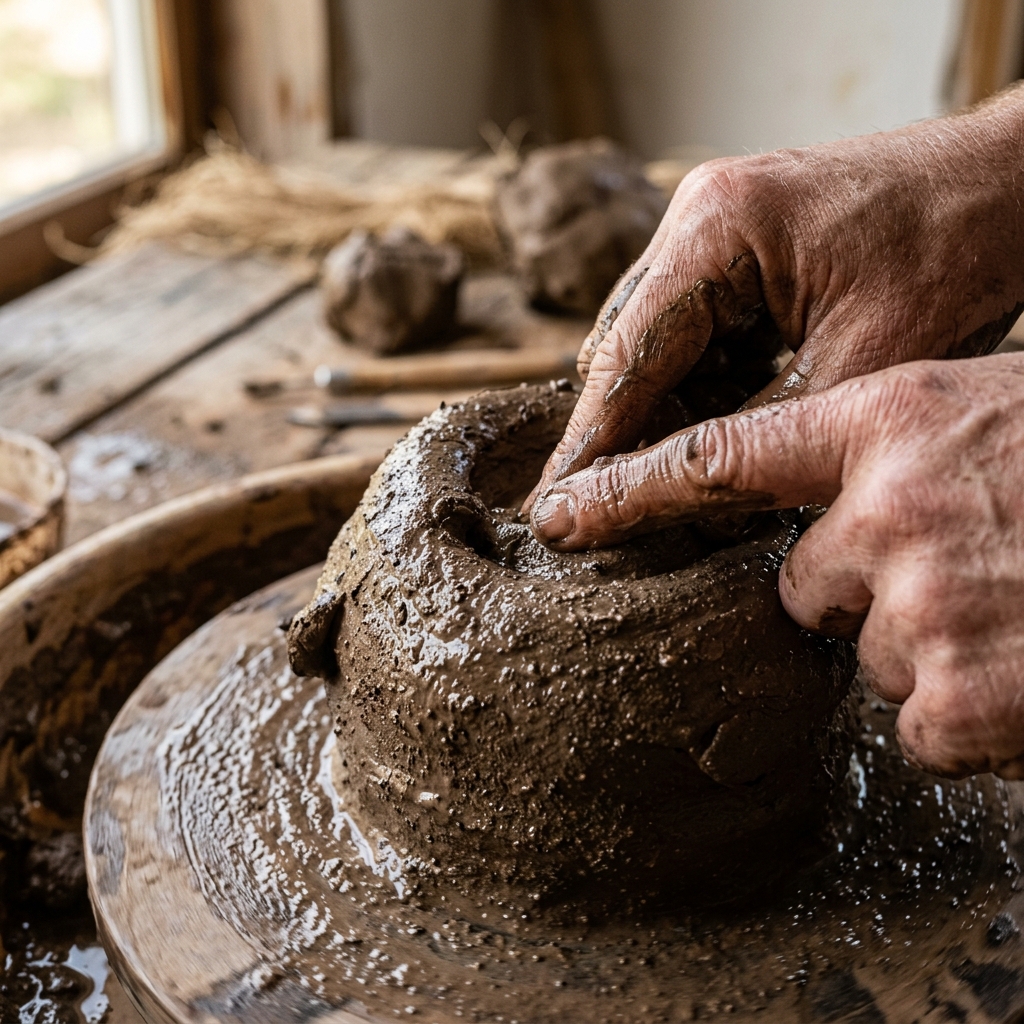
In authentic practice, the canvas is an extension of the earth. The surface of moisture-resistant boards or village walls is prepared using a wash of **purified cow-dung slurry and alluvial clay**. Far from being crude, sun-dried cow dung acts as an organic antifungal, natural thermal regulator, and textural ground that absorbs light with a velvety matte warmth.
The painting itself is executed exclusively in white, made from ground rice flour paste mixed with water and natural acacia gum (*babool* resin) to bind the pigment. Using a chewed bamboo reed or single straw, the artist applies rhythmic dots and dashes. There are no rulers, compasses, or preliminary charcoal outlines; each composition unfolds organically from the center outward.
### The Tarpa Dance: Cosmic Continuity
The defining motif of Warli art is the **Tarpa Dance**. In the center stands the Tarpa player blowing into a dried wind gourd. Surrounding him, village men and women intertwine their hands in an expanding spiral. The dancers never turn their backs to the center. This spiral mirrors the path of the seasons, the winding river, and the collective heartbeat of community survival.
Back to Journal Index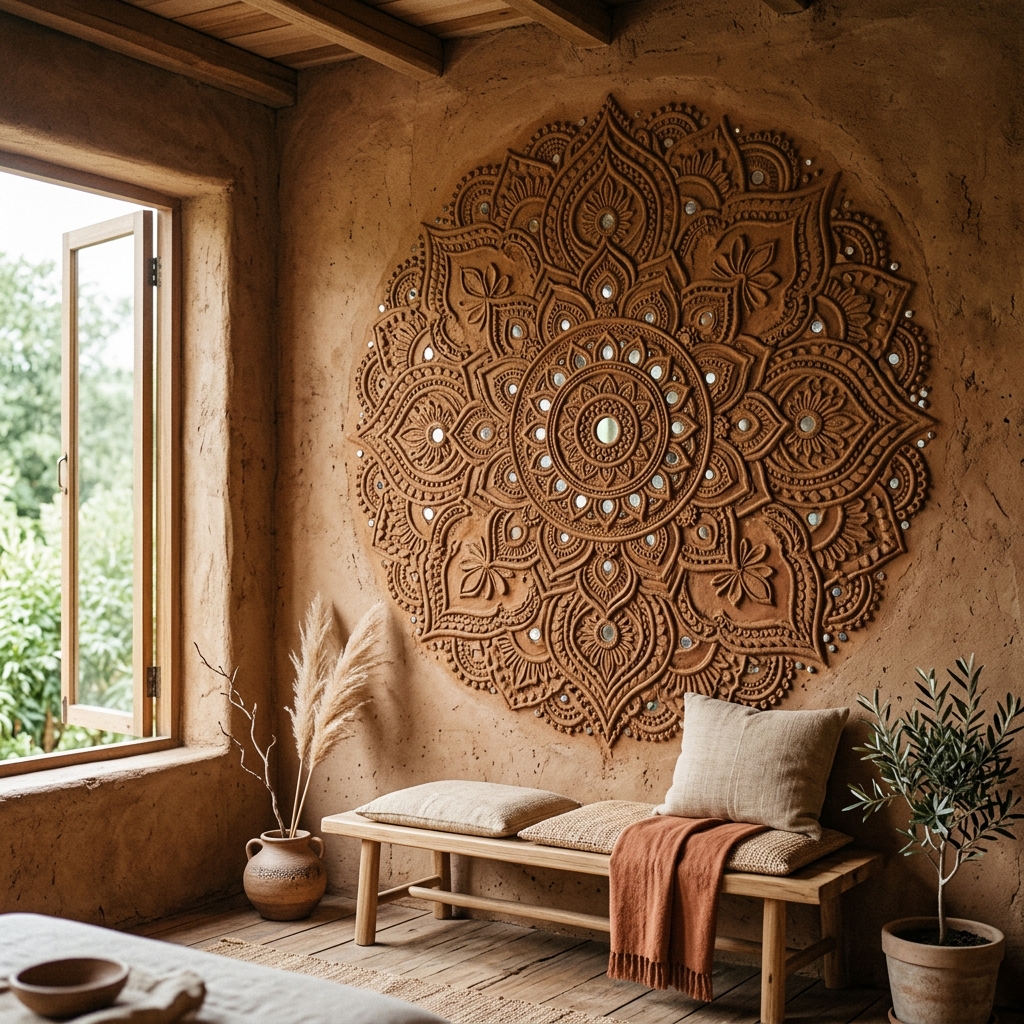
heritage•6 min read•January 10, 2025
What is Warli Art? Cosmic Geometry & Ancient Agricultural Rhythms
"Originating thousands of years ago in the North Sahyadri mountains of Maharashtra, Warli tribal art uses fundamental geometric circles, triangles, and squares to record human harmony with nature."
Rachana AgarwalFolk Artist & Founder of Craftchirp • 15+ Years Practice
About the Author
Rachana Agarwal
Rachana has spent over 15 years mastering and modernizing Warli tribal and Madhubani ritual art. All writings are grounded in studio research, natural material foraging, and ancestral preservation.
View Rachana's Artist Profile & Portfolio →From the Studio
Full Gallery →Featured Original Creations
Dev PlaceholderPending Studio Photography
1-of-1 Original
Warli • painting2025
Rhythm of the Tarpa
Purified natural cow-dung base, rice paste & natural earth pigments on moisture-resistant MDF board
30 × 30 cm · 11.8 × 11.8 in
Landed Price$420
Inspect & AcquireDev PlaceholderPending Studio Photography
1-of-1 Original
Warli • painting2025
Tree of Ancestral Life
Purified natural cow-dung base, natural soot charcoal & terracotta pigment on moisture-resistant MDF
45 × 60 cm · 17.7 × 23.6 in
Landed Price$680
Inspect & AcquireDev PlaceholderPending Studio Photography
1-of-1 Original
Madhubani • painting2024
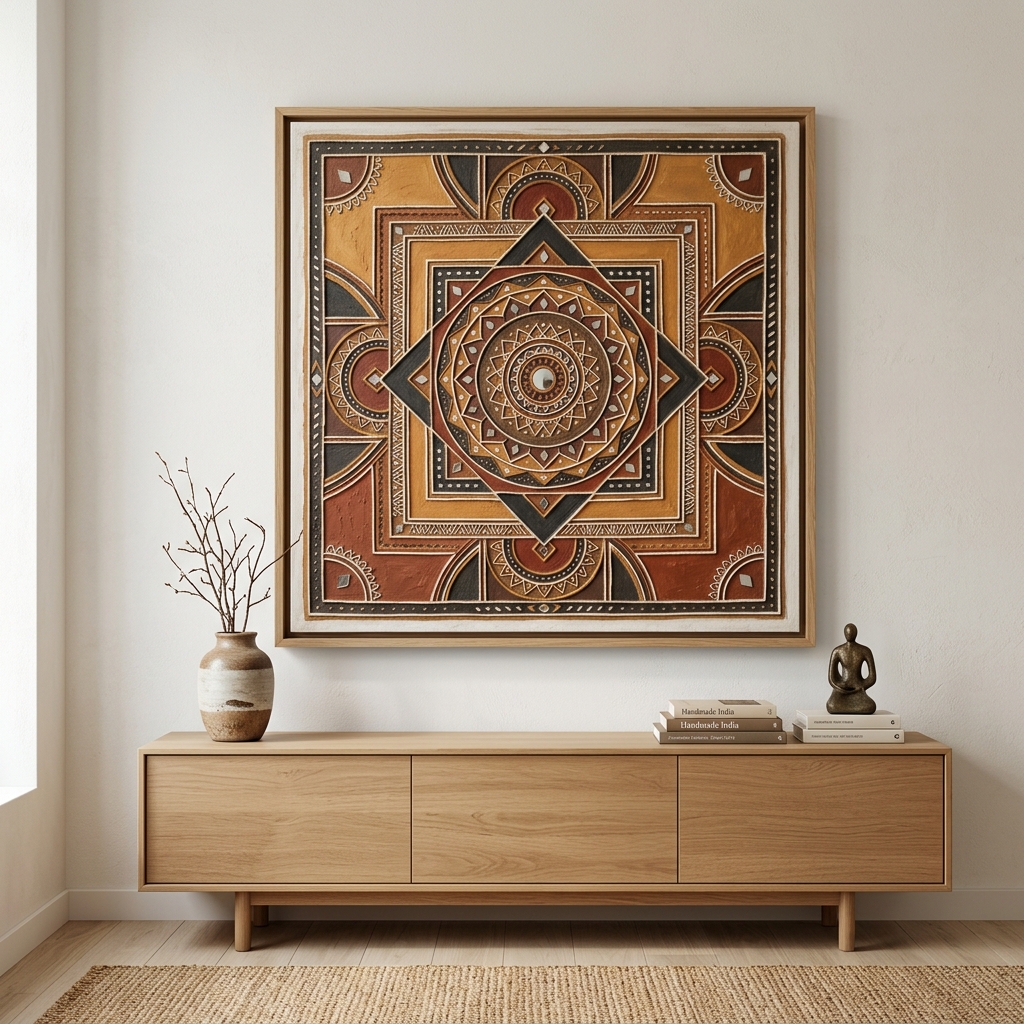
Sacred Mithila Mandala
Natural cow-dung washed MDF with turmeric yellow, soot black, and earth ochre
40 × 40 cm · 15.7 × 15.7 in
Landed Price$550
Inspect & Acquire